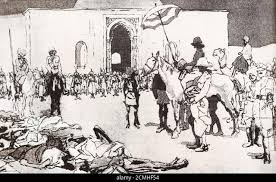
In the town of Amritsar, under the oppressive shadow of British colonial rule, a quiet and hopeful spirit lingered in the hearts of its people. They yearned for freedom, for a chance to reclaim their dignity and shape their own destiny. But their dreams were shattered on that fateful day, forever etched in history.
It was a warm April morning when the bustling streets of Amritsar came to life. The air carried whispers of discontent, as news spread of the repressive Rowlatt Act and the people’s determination to resist its chains. In Jallianwala Bagh, a serene public garden, the townsfolk gathered, their spirits alight with peaceful protest.
Among them stood General Reginald Dyer, a stern embodiment of British authority. A choice lay before him – to listen to the pleas of the people, to understand their aspirations, or to unleash a storm that would forever stain his soul.
In the golden glow of the sun, General Dyer made his decision. With a heart void of compassion, he commanded his troops to march into the gardens. Fear coursed through the veins of the unarmed men, women, and children, as they found themselves surrounded by the very forces meant to protect them.
A moment of tense silence hung in the air, broken by the crack of gunfire. Panic and chaos erupted as bullets tore through the crowd, cutting short the dreams and hopes of countless innocent souls. The gardens transformed into a sea of anguish, echoing with the cries of pain and loss.
Mothers shielded their children with their own bodies, fathers embraced their loved ones, and the young and old alike sought solace in each other’s arms. But no embrace could shield them from the cruel reality of the British rule, from the violence that tore apart their lives.
Time stood still as the tragedy unfolded, leaving scars that would never truly heal. The numbers etched in history pale in comparison to the depth of the anguish felt by those who survived. Families shattered, futures extinguished, and a community forever scarred.
The world watched in horror as news of the massacre spread like wildfire, evoking a wave of empathy and solidarity. Within the heart of the tragedy, seeds of resistance were sown. The cries of anguish transformed into a rallying cry for independence, for justice, and for a future free from the shackles of colonial oppression.
Though General Dyer’s actions were a testament to humanity’s capacity for cruelty, they also ignited a fire within the souls of those who had endured his wrath. From the depths of their grief, they emerged stronger, united in their pursuit of a better tomorrow.
The Jallianwala Bagh massacre became more than a footnote in history; it became a symbol of the indomitable spirit of a people longing for freedom. And as the sun set on that tragic day, a resolve was born – a resolve that would lead India on its arduous journey towards independence, guided by the unwavering belief in the power of justice, compassion, and the unyielding human spirit.

 trs fiction